Quick answer
Replacing old windows can help with drafts when air is passing through a worn sash seal, a damaged frame, or an installation gap that the replacement work correctly addresses. It will not fix a draft caused by attic or wall leakage, an HVAC imbalance, or cool glass that creates a downward air pattern. Before comparing products, identify where the air moves and ask what installation details are included. A replacement estimate should explain the proposed unit, opening work, removal, finish work, permit responsibility, and warranty terms.
The short answer depends on the source
The word “draft” can describe two different experiences. A true air leak allows outside air to move through a gap. A room can also feel drafty when air near a cool interior glass surface sinks and circulates, even if the window is closed tightly. The difference matters because new windows may address a product or installation leak, but they may not fix other building-envelope or airflow conditions.
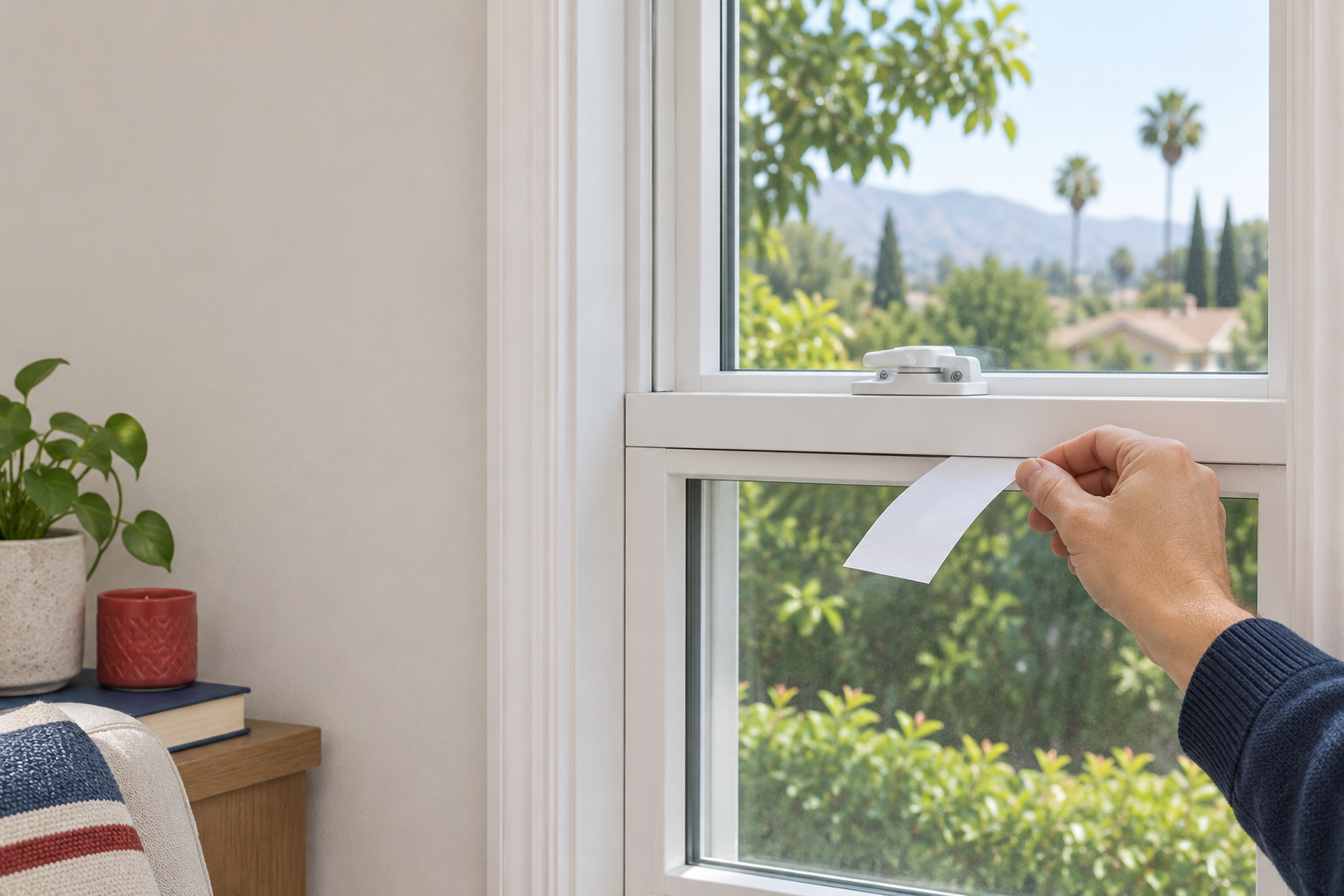
Start with the location. If you feel air at the sash joint, check whether the window is fully closed and locked and whether the sash sits evenly. If the air seems to come from the trim-to-wall edge, the installation perimeter may need assessment. If there is no clear moving air but the pane feels cold, consider the glass surface, room airflow, sun exposure, and HVAC. Persistent haze trapped between panes can indicate a failed insulated-glass seal; condensation on the room-side surface is a separate observation.
The core drafty-window guide for Van Nuys explains how to distinguish common symptoms before choosing a next step. That diagnosis should come before selecting a brand or assuming replacement is necessary.
When replacement may help
Replacement can be worth considering when the window assembly itself is in poor condition or has several related failures. A sash that no longer closes or locks evenly, a deteriorated frame, cracked components, recurring air leakage at multiple joints, or glass fog that remains between panes are reasons to seek an evaluation. The evaluator should explain what is failing and whether a repairable part, glass unit, sash, or complete window is the appropriate scope.
Replacing an older unit may also allow a homeowner to compare modern products with different frame materials, glazing options, air-leakage ratings, U-factors, and solar heat gain coefficients. The Department of Energy describes air leakage ratings as a measure of air moving through cracks in the window under specified test conditions. Product ratings help compare units, but they do not by themselves show how well a specific installation will seal the opening.
In the San Fernando Valley, homeowners may care about both summer solar heat and cooler winter evenings. Window selection involves balancing heat transfer, solar gain, light, ventilation, appearance, and budget. One specification cannot answer every goal. Ask to see the product data and explain what the chosen configuration is intended to improve.
When replacement may not solve the draft
The leak is somewhere else in the home
ENERGY STAR notes that air leaks can occur in attics, basements, and other building areas, not just windows. If the cold sensation extends along a wall, appears around outlets, or continues when the window area is covered, an air leak or insulation issue elsewhere may be involved. Replacing a window without addressing that source may produce little change in the room.
The glass feels cold but no seam is leaking
Air that cools along a pane can flow downward. This can feel like a draft and cause discomfort near a large window. A new window with different thermal performance may change the interior glass temperature, but the result depends on the specific product, installation, and room conditions. Ask the provider to separate a comfort goal from a promise of a particular energy-bill reduction.
The heating or cooling system is unbalanced
A blocked supply register, duct problem, or restricted return path can leave one room less comfortable. Check that vents are unobstructed and note whether the problem changes when doors open or the HVAC runs. Window replacement is not an HVAC repair; if airflow appears to be the main issue, consult the relevant professional.
The opening itself needs more than a new unit
An installation gap between the unit and rough opening can allow air to pass around a window. The U.S. Department of Energy’s Building Science Education material explains that the gap must be air-sealed carefully. If the proposal replaces only the unit but omits the installation perimeter work needed for the scope, the original leak path could remain. Ask how the opening is assessed and sealed and how water drainage is preserved.
Retrofit and full-frame replacement are different scopes
Many homeowners hear terms such as “insert,” “pocket,” “retrofit,” and “full-frame.” The exact meaning can vary by contractor and product system, so ask the installer to describe the work in plain language. A retrofit or insert approach generally retains some of the existing frame and fits a new unit into the existing opening. A full-frame approach removes more of the existing assembly and exposes more of the opening for inspection, but it may require additional finish work.
Neither method is automatically best for every home. Existing frame condition, water management, exterior finish, dimensions, window style, and project goals matter. A proposal should identify what will remain, what will be removed, how the opening will be prepared, and whether the trim or exterior finish will change. Ask what the crew will do if hidden damage appears after removal and how any change is documented.
The method also affects disruption and total scope. Removing more of the assembly can require more interior or exterior finish work. Keeping more of the existing frame may preserve finishes but may not be appropriate if the frame or opening has problems. A qualified evaluator should connect the installation approach to the actual condition rather than using one method for every opening without explanation.
Compare what is included, not just the window label
| Estimate item | Questions to ask |
|---|---|
| Product | What manufacturer, series, operation type, frame material, glass, and performance values are specified? |
| Installation method | What parts of the old window remain? How will the opening be inspected and sealed? |
| Water management | How will flashing, sealant, and drainage details be handled for this opening? |
| Interior and exterior finishes | Is trim removal or replacement, patching, painting, or siding/stucco work included or excluded? |
| Removal and disposal | Who removes the old window and takes away debris? |
| Permit and inspections | Which agency serves the property, who checks requirements, and who handles applications and inspections if needed? |
| Warranty | Which items are covered by the manufacturer and installer, for what period, and with what exclusions? |
Ask for the response in writing. Two estimates are not comparable if one includes exterior finish repair and another does not. A more expensive product is not automatically the best choice, and a lower total may leave important work outside the stated scope.
What to expect from a Van Nuys estimate conversation
American Reliable Windows & Doors is located at 6161 Van Nuys Blvd in Van Nuys and lists window sales, replacement, and installation. Its public service information does not establish whether every standalone repair is offered, so call first if the request is for weatherstripping or glass-unit repair. If replacement is under consideration, describe the window count, room, symptom, when it happens, whether the sash latches, and any visible frame or glass condition.
The estimate should identify the openings and product selections being discussed. Ask whether the proposed work is replacement-only or includes a related opening detail. Ask which items may create a change order and how those changes are approved. Do not rely on verbal assumptions about cleanup, interior protection, schedule, paint, caulk, or disposal; ask that the scope spell them out.
Permit requirements can depend on the property’s jurisdiction and the replacement scope. The Los Angeles Department of Building and Safety indicates that some same-size, same-type window and door replacements within the City of Los Angeles may qualify for an express permit. Van Nuys addresses can fall under different service jurisdictions, and a change in size or type can affect the process. Ask the contractor to verify the applicable agency and document who handles any permit and inspection steps.
A decision checklist before you approve the project
Before signing, summarize the problem in one sentence and ask the provider to connect each proposed task to that problem. For example, if moving air is felt at the sash, the estimate should explain the sash condition and how the selected work addresses that location. If the discomfort is mostly a cold glass surface, ask how the selected product’s performance information relates to that comfort goal and what other room conditions may still matter.
Use this short checklist to compare the scope:
- Diagnosis: Which component or opening is believed to cause the symptom, and what evidence supports that conclusion?
- Product: What exact window type, operation, frame, and glass configuration are included?
- Opening work: Which existing frame parts stay, which are removed, and how is the installation gap addressed?
- Water management: How will the installation preserve drainage and manage water at the opening?
- Finish work: Is interior trim, exterior trim, patching, paint, stucco, or siding work included?
- Project logistics: Who handles removal, disposal, protection, cleanup, permit checks, and inspection coordination?
- Terms: Which manufacturer and installation warranties apply, where are exclusions written, and how are changes approved?
Save the written proposals and product documents together. If a salesperson describes a benefit that does not appear in the scope, request clarification in writing. Product labels, ratings, and warranty documents are more useful than a verbal shorthand such as “energy efficient” or “lifetime coverage.” Ask what the exact product rating means for the planned opening and whether it applies to the entire configured unit. If the provider cannot answer a technical question, ask who can supply the product documentation before making the selection.
Questions to settle before approving replacement
Ask the evaluator to point out the condition that the proposed replacement is intended to address. Is the air moving through the operable sash, around the installed frame, or from a different part of the room? Which parts of the existing assembly can remain, and which will be removed? Will the selected installation approach expose the opening, and what repair or finish work is included if hidden damage is found?
The written estimate should identify the product configuration, number and location of openings, removal and disposal, installation scope, interior or exterior finish work, permit responsibilities, and warranty documents. Ask how the installer will check window operation and the perimeter after the work. These questions do not predict the result, but they make clear what the project is designed to change and what remains outside its scope.
Frequently asked questions
Will new windows stop all outside air from entering my home?
No window alone can seal every air path in a home. Correct product fit and installation can reduce leakage at the window, but air may also enter through walls, attic, floor, doors, or other openings. The estimate should describe exactly which locations and tasks are included.
Are old windows always the cause of a cold room?
No. A cold glass surface, HVAC airflow, shaded walls, or insulation gaps can affect one room. Check whether you feel air at a window seam and compare the room with nearby spaces before assuming the unit has failed.
Can replacing only the glass help with a draft?
Glass replacement may address persistent fog between panes or a damaged glass unit, but it may not fix air moving through the sash, frame, or rough opening. Identify the location of the air path and confirm which component the proposed work addresses.
Do new windows guarantee lower energy bills?
No. Energy use depends on product performance, installation, household behavior, climate, HVAC equipment, insulation, and other leaks. Compare documented performance ratings and avoid relying on a guaranteed savings figure without a home-specific basis.
What should I bring to a window estimate?
Bring photos, approximate window counts and sizes, product labels if available, and notes about the symptom and when it occurs. Ask for a written scope that identifies product, installation, finish work, removal, permit responsibility, and warranty terms.
Decide after the inspection explains the problem
Window replacement can help when the old assembly or its installation is the source, but it is not a universal cure for a cold room. Compare the diagnosis, scope, installation details, performance ratings, and total written estimate. Review replacement-window options and the Van Nuys drafty-window guide, or request an estimate. Call (818) 787-1101 to discuss whether the specific service is currently available.
Sources
- U.S. Department of Energy: Energy-Efficient Residential Windows, Doors, and Skylights
- U.S. Department of Energy: Rough Opening Flashing and Air Sealing
- ENERGY STAR: Locating Air Leaks
- Los Angeles Department of Building and Safety: Contractor Step-by-Step

Elliot Berookhim
With over 15 years of industry experience, Elliot Berookhim specializes in residential window and patio door replacement throughout Los Angeles, California. At American Reliable Windows & Doors, he emphasizes quality materials, trained in-house installers, transparent pricing, and installation practices designed for long-term performance. His firsthand experience helps homeowners avoid common problems such as poor installation, premature window failure, and costly water leaks.