Soft or Rotted Window Trim in Pasadena: Repair or Replace?
A soft sill or peeling casing does not tell you how much wood is affected—or whether the window itself has failed. Find and stop the moisture source before choosing repair or replacement.
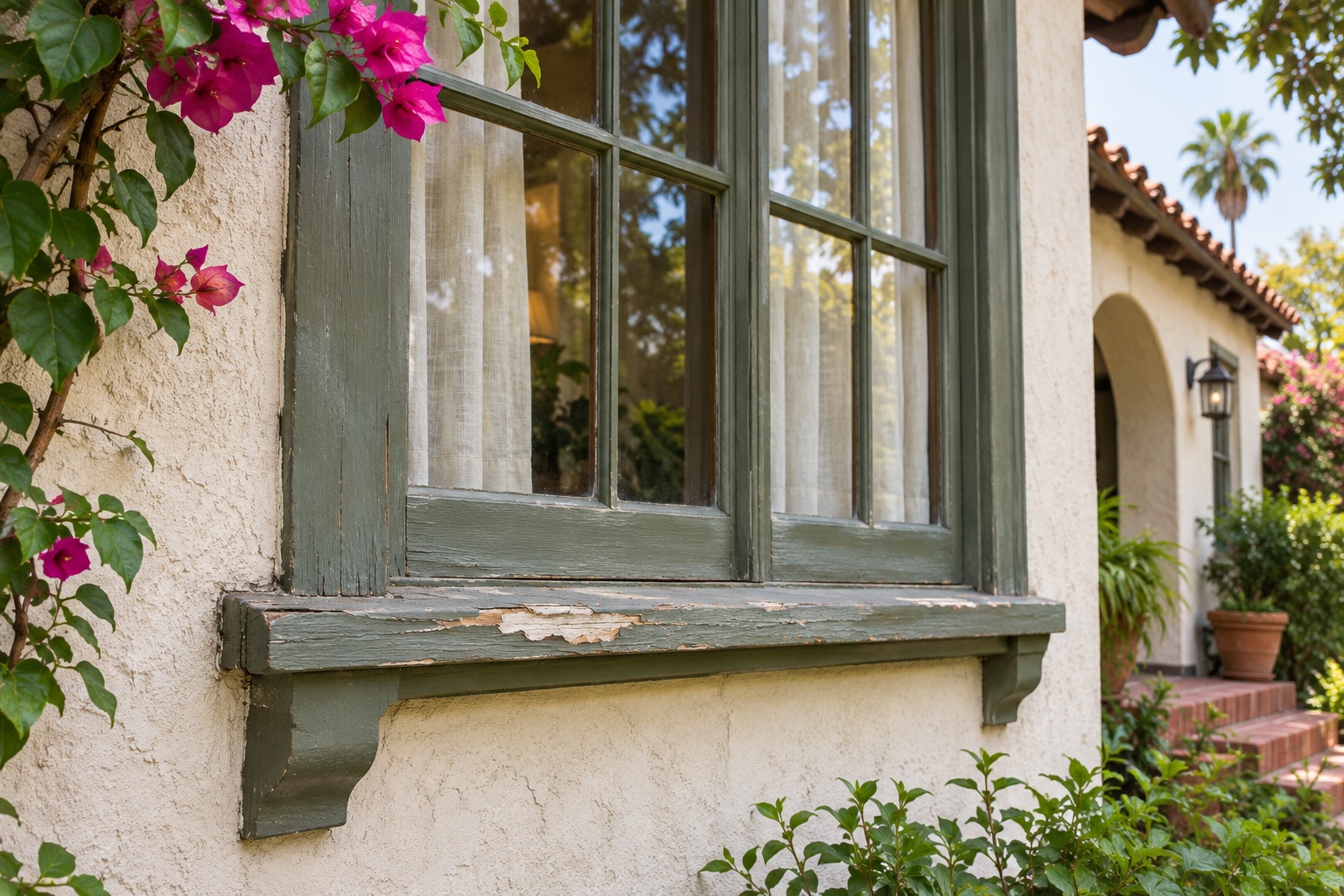
Water around a window can be unsettling, especially after a Pasadena rainstorm when the source is not obvious. Homeowners often want to know whether they need a new window, a repair, or a different trade. The most useful first step is to separate what you observed from what you suspect. A damp sill is a symptom; the path that brought water there still needs to be understood.
What “soft trim” can and cannot tell you
Soft, swollen, stained, or paint-damaged trim signals that moisture deserves attention. It does not reveal how far damage extends, whether the frame is affected, or where water entered. A sill can deteriorate from repeated wetting while the sash remains sound; conversely, the visible trim can look acceptable while concealed wood is damaged. Avoid deciding from the surface appearance alone. The important first question is what kept the material wet and whether that source is still active.
A simple visual review can note paint failure, open joints, discoloration, separation, or areas that seem misshapen. Avoid forceful probing, scraping away finishes, or cutting into a wall unless a qualified professional has explained the scope and safety considerations. Do not paint, caulk, or cover wet wood to make it look better. Record close photos and a wider view showing the whole window and nearby wall. A documented baseline helps compare the condition over time and makes contractor discussions more concrete.
For a broader overview, read our Pasadena window leak and moisture guide.
Find the water source before choosing a repair
Moisture may reach wood from a failed window joint, exterior sealant, flashing, nearby roof or gutter, plumbing, or indoor condensation. A leak that appears during wind-driven rain is different evidence from dampness that appears every morning. If stains occur above the frame or extend along the wall, look beyond the window unit. Flashing is hidden behind exterior finishes, so the visible trim may only be where water finally appears—not the point where it entered.
Write down when the moisture appears and what the weather was like. Note whether there has been recent roofing, stucco, painting, window, or plumbing work. Photograph the sill and corners, but do not direct a hose at the opening or remove trim to investigate on your own. If the damage is extensive or wet materials may be concealed, a building-envelope or restoration specialist may be more appropriate than a replacement-only estimate. A window professional can discuss unit condition and replacement scope when the window itself is implicated.
When a localized wood repair may make sense
If damage is limited to a replaceable trim component and the underlying window and framing are sound, a finish carpenter or restoration specialist may be able to patch, splice, or replace only the affected piece. The repair still depends on correcting the moisture source and matching the material, profile, and finish. Ask what will be removed, what remains, and how the repair interfaces with the window and exterior wall. A small visible repair is not sufficient if the source remains active.
Historic wood windows often deserve a careful repair-versus-replace discussion. Pasadena’s design guidelines encourage repair of historic frames and sashes when conditions permit and describe patching, piecing-in, and reinforcing wood components. That guidance is relevant to designated historic contexts; it is not a blanket rule for every home or a guarantee that every damaged window can be saved. Have a qualified preservation professional assess condition and check local requirements before changing original features.
For moisture-control background, see the EPA’s guide to mold and moisture. Its drying guidance is general and does not replace professional assessment of concealed damage.
When replacement may be part of the answer
Replacement can be reasonable when the window itself is significantly deteriorated, cannot operate or secure as intended, has repeated unit-level failures, or when a documented repair is not practical. The extent of surrounding trim and wall work should be stated separately. A replacement unit does not automatically repair a wet wall, rotted framing, failed flashing, or damage caused by a roof or plumbing leak. The estimate should explain how the opening will be handled and which finishes are included.
Ask for a written scope that identifies the product, installation approach, removal and disposal, opening preparation, flashing or water-management details, trim, stucco or siding, interior finish, painting, permit responsibilities, exclusions, and warranty coverage. If the contractor finds concealed damage after removal, ask how additional work will be documented and approved before proceeding. Comparing two estimates is easier when each states the same boundaries. Our published service information covers replacement window sales and installation; confirm whether trim or repair work is included for a specific project.
Repair versus replace: questions to compare
Use the table as a conversation guide, not a diagnosis. A repair specialist, window installer, roofer, or restoration professional may each see a different part of the problem. Ask each provider to describe the condition they observed and how it supports the proposed scope. If one estimate focuses on replacing the unit and another on the wall, they may not be quoting the same work. Ask what remains unresolved if you approve only one portion.
A useful comparison includes near-term work and the follow-up needed to confirm the source is controlled. Clarify whether temporary protection, removal of damaged wood, matching trim, waterproofing details, disposal, interior repair, painting, historic review, and permits are included. Ask who coordinates separate trades if more than one system is involved. Keep copies of photographs, findings, and written estimates so that later work can refer to the same evidence.
Repair and replacement questions to compare
| What you observe | Ask about repair | Ask about replacement |
|---|---|---|
| Condition to clarify | Repair conversation | Replacement conversation |
| Localized trim damage; window appears functional | Can only the affected trim be repaired, and how is the water source corrected? | Would a new unit solve the documented condition, or is replacement unnecessary? |
| Softness extends into frame or sash | Can a restoration specialist repair the affected wood and retain original material? | What evidence shows the window unit is beyond practical repair? |
| Moisture may be coming from wall or roof | Who evaluates the concealed wall or roof path? | What parts of the leak will remain outside the replacement scope? |
How to compare repair quotes for Pasadena wood windows
Ask each provider to identify the part being repaired: sill, casing, sash, frame, surrounding wall, or more than one component. Ask what material remains in place, what is being removed, how the new piece will match the existing profile, and whether the finish is included. A quote that says only “repair rot” is difficult to compare because it does not describe the boundary of the work. Request photos or a written description of the affected area and any limits on what could be confirmed without opening the assembly.
Then ask how the water source will be corrected. Replacing a trim board without addressing recurring wetting can leave the conditions that caused deterioration. On the other hand, a broad replacement proposal may not be necessary if the window itself is serviceable and the damage is limited. Ask whether the work includes flashing or sealant at the interface, who handles paint and stucco, and whether another trade must evaluate a roof, wall, or plumbing source. The quote should state what happens if additional concealed damage appears and how you approve changes.
For older homes, include appearance and preservation in the comparison. A repair can preserve original material and profiles, while a replacement can change sightlines, muntin patterns, casing, or the face of the building. If historic review may apply, include the time needed to confirm requirements before scheduling. Keep the quotes, photos, and any City guidance together. A clear written scope helps you choose based on the actual condition and intended result, rather than relying on a single label such as “rot repair” or “full replacement.”
Separate the window from the surrounding wall and finish
Window trim is the visible edge of a larger opening. Water can damage a casing or sill even when the sash and frame remain serviceable, and moisture behind a wall can affect trim from the back. A repair conversation should say which component is damaged and whether the proposed work addresses the source. Ask whether the provider inspected the whole unit, only the trim, or any accessible wall details. If a contractor cannot see a concealed area, that limit should be stated rather than guessed away.
Ask how new trim will meet the window and exterior finish. Clarify whether removal is limited to one board or includes other materials, how the joint will be protected, whether paint or stucco work is part of the quote, and who handles interior finishing. If the water source may be a roof or plumbing issue, get that checked before investing in carpentry or a new window. A provider who only sells and installs replacement windows may not perform finish carpentry, wall repair, or restoration, so confirm scope with each company.
Before agreeing to a larger scope
Request the evidence behind a full replacement recommendation. Ask whether the frame is soft, separated, distorted, or unable to operate; what measurements or visible conditions support that conclusion; and whether localized repair was considered. If damage appears limited, ask a qualified wood-window or finish specialist about repair options. If the provider recommends opening the wall, ask what will be removed, how the area will be protected, and how you will approve additional work once concealed materials are visible.
A useful written estimate identifies labor, materials, removal and disposal, installation or repair steps, surface finish, permit or historic-review responsibilities, exclusions, and warranty terms. Keep notes and photographs with the quote. If two proposals differ, compare the areas each one addresses and whether they include source correction. This is more meaningful than comparing totals without knowing whether both contractors are solving the same part of the problem.
Plan timing around Pasadena historic review
If the home is designated or sits within a historic district, confirm the review path before choosing a window or scheduling visible exterior changes. The City notes that replacement windows are among work often reviewed in landmark districts and that any required approval must come before a building permit. The process depends on the property and scope; do not assume all houses in Pasadena have the same requirements. Contact City staff with the address, photographs, and a clear description of the proposed work.
For original wood windows, gather product information and photographs of the existing configuration before requesting a replacement. Ask whether localized repair can retain the sash, casing, and profile, and whether a compatible replacement would be acceptable if the unit cannot be repaired. Include time for review in your project schedule, especially if materials need to be ordered after approval. A contractor estimate should state who is responsible for confirming permits or preservation review, and whether the price includes any required documentation or revised product selections.
This step does not replace a condition assessment. Historic status does not establish that a window can be repaired, just as visible deterioration does not prove that the entire window is beyond repair. Consider both questions together: what material is damaged and what choices fit the property requirements. A preservation specialist can advise on the former; the City can advise on the latter.
American Reliable Windows & Doors’ published services are window sales, installation, and replacement. Standalone leak testing, water-intrusion diagnosis, caulking, restoration, and repair-only availability are not confirmed in the public service information. Call to confirm whether the requested work fits our scope.
Frequently asked questions
Does soft window trim always mean the window needs replacement?
No. The visible trim does not establish the condition of the whole unit. Identify the moisture source and have the affected materials assessed before choosing a scope.
Can rotted wood be patched?
Sometimes, depending on the location, extent, remaining material, and whether the moisture source is corrected. A qualified carpenter or restoration professional can explain options.
Should I paint over soft trim?
No. Painting can conceal a symptom without stopping moisture. Document the condition and address the cause before refinishing.
Are historic Pasadena windows required to stay original?
Rules vary by designation and project. The City says replacement is commonly reviewed in landmark districts; confirm status and requirements with City staff.
Does American Reliable repair rotten trim?
The company’s published offering centers on window sales, installation, and replacement. Ask whether trim repair is included in a specific replacement scope or whether you need a restoration or carpentry specialist.
What should a written estimate include?
Ask for the unit, removal, opening preparation, installation, water-management details, trim and finish work, exclusions, permits, and how concealed damage is handled.
Talk through replacement options
If the window itself appears to be part of the problem, share your photos and timeline and ask what a replacement estimate includes. We serve Los Angeles County and can discuss window sales and installation for the scope we confirm.
Request a window estimate · Call (818) 787-1101 · Pasadena service-area information

Elliot Berookhim
Window & Door Installation Specialist
American Reliable Windows & Doors
With over 15 years of industry experience, Elliot Berookhim specializes in residential window and patio door replacement throughout Los Angeles, California. At American Reliable Windows & Doors, he emphasizes quality materials, trained in-house installers, transparent pricing, and installation practices designed for long-term performance. His firsthand experience helps homeowners avoid common problems such as poor installation, premature window failure, and costly water leaks.
✓ CA C-17 License #1025297 ✦ 15+ Years Experience
Published November 17, 2026 · Updated November 17, 2026
