Window Sill Water Damage: When to Call a Pasadena Contractor
A damp sill can be a small surface event or a sign of recurring moisture behind the wall. Protect the area, document the pattern, and act promptly when water keeps returning.
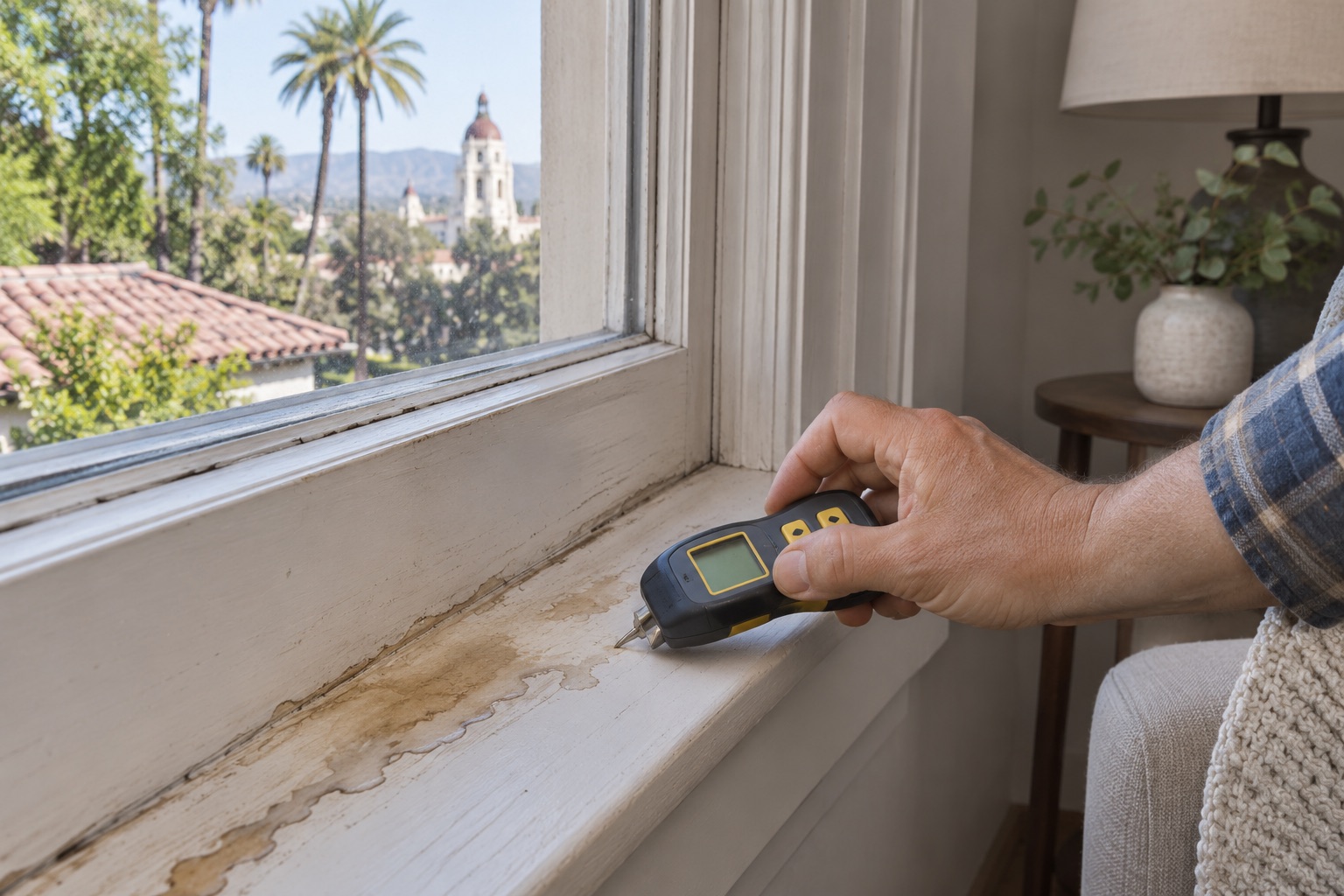
Water around a window can be unsettling, especially after a Pasadena rainstorm when the source is not obvious. Homeowners often want to know whether they need a new window, a repair, or a different trade. The most useful first step is to separate what you observed from what you suspect. A damp sill is a symptom; the path that brought water there still needs to be understood.
Decide whether the issue is active or historic
A fresh puddle, steady drip, or wet wall after a storm calls for immediate protection and documentation. A dry stain may reflect an older event, but it can still point to a recurring source or material damage. Note whether the sill feels cool and damp, whether paint is lifting, and whether the condition changes after rain. Do not rely on color alone: old water marks can remain after drying, while concealed dampness may not be obvious at the surface.
Move nearby belongings and electronics. Blot visible water and dry surfaces that are safe to reach. If the leak is near electrical components, avoid contact and call an appropriate professional. Do not remove trim, open drywall, or climb outside to inspect the roof. Photograph the window, whole wall, sill, and visible exterior from a safe location. Keep a simple log of dates, weather, amount of water, and any repairs attempted.
For a broader overview, read our Pasadena window leak and moisture guide.
Why timing matters for wet materials
Time is useful information for both diagnosis and preventing further damage. Note whether moisture appears during rain, after wind gusts, overnight, after running a sink or shower, or when indoor humidity is high. Moisture on glass that wipes away from the room side may be condensation; water emerging at a joint or staining the wall may have another cause. Several sources can occur together, so a single clue should not be treated as conclusive.
The EPA advises drying wet areas and materials as soon as possible, ideally within 24 to 48 hours, and says not to enclose materials that are wet or show signs of growth. This is general moisture guidance, not a promise that mold will or will not develop in a particular home. If wetness is extensive, hidden, persistent, or accompanied by visible growth or a strong odor, contact a qualified restoration or mold professional. Window replacement is not remediation.
What the sill can tell you—and what it cannot
Sill damage can reveal repeated exposure: peeling paint, swollen edges, dark staining, softness, separation at corners, or deteriorating caulk. It may suggest that water has been present, but it does not show whether the source is the glass, sash, frame, perimeter joint, wall flashing, roof, or plumbing. Water may travel behind finish layers and appear at the lowest opening. A contractor should explain which observations support the proposed source and what remains uncertain.
Avoid poking deeply into wood or scraping away paint if you do not know what is behind it. A qualified evaluator can determine whether controlled probing, moisture measurement, removal of trim, or further testing is appropriate. Ask what each test can establish and whether it could cause damage. If a window replacement estimate is offered, ask whether it addresses the opening and surrounding water-management details, and what additional work might be needed if concealed damage is found.
For moisture-control background, see the EPA’s guide to mold and moisture. Its drying guidance is general and does not replace professional assessment of concealed damage.
When to call a professional promptly
Contact a qualified professional when water keeps returning, the sill or nearby wall stays damp, wood feels soft, the stain spreads, water flows beyond the sill, or the source is not clear. Call urgently if there is water near electrical systems, ceiling sag, extensive wet materials, or a safety concern. Persistent moisture can affect finishes and adjacent components. Select a provider whose work matches the likely source rather than assuming every wet sill requires a window replacement.
If the affected area is small and appears dry, you can still record it and watch for recurrence, but do not cover it with paint or sealant before understanding the cause. If an insurance claim may be involved, follow your insurer’s documentation instructions and keep dated photos and receipts. This article is general homeowner information, not legal, insurance, health, or building diagnosis advice. For concealed wet assemblies or extensive damage, seek qualified local help.
Choose a contractor by scope, not title alone
Ask whether the visit is a no-cost estimate, paid inspection, controlled water test, or full diagnostic assessment. These are different services. Request a written description of what the contractor will inspect, what areas can be accessed, whether finishes will be removed, what tools are used, and what written result you will receive. Ask what is excluded and whether the provider handles repair, replacement, restoration, or merely the assessment. A clear boundary prevents mistaken expectations.
A window installer may help assess a window unit and discuss replacement. A roofer, plumber, building-envelope specialist, carpenter, or restoration contractor may be needed for other causes. Check references and credentials relevant to the specific scope, verify license status through California’s contractor licensing resources, and ask for proof of insurance and a written estimate. Avoid choosing based only on a broad promise to “fix the leak” if the proposal does not explain how the source was identified.
What to ask before approving work
Ask the contractor to explain the observed evidence, likely source, level of certainty, and alternative possibilities. Ask whether the proposed work addresses the source or only repairs the visible finish. If a new window is proposed, request details on removal, installation method, flashing or water-management scope, trim and interior finish, disposal, permits, exclusions, and the process for concealed damage. If repair is proposed, clarify which materials will be retained and how the repaired area will be protected.
Get a written estimate and compare scopes line by line. Ask who coordinates the roofer, plumber, or finish contractor if separate work is needed. Find out how changes are priced and approved before they happen. Keep photos and notes with the estimate. If contractors disagree, compare the evidence each used and consider a specialist whose work covers the disputed part of the building. A second opinion is most useful when it answers a specific question rather than repeating a replacement quote.
Pasadena homes with older or designated windows
Older Pasadena homes may have wood sills, trim profiles, or original sash that deserve a preservation-sensitive review. A damaged sill may be repairable even when other components are sound. The City’s historic guidelines discuss repairing wood window components by patching, piecing-in, consolidating, or reinforcing material. The right option still depends on condition and moisture source; no online article can determine whether an individual sill is salvageable.
If the property is in a landmark or historic district, ask City staff whether proposed exterior work needs review. Pasadena lists replacement windows among changes often reviewed for landmark districts, and required approval must precede a building permit. Confirm the current process directly. If preservation matters, include a qualified restoration specialist in the comparison so the decision weighs appearance and retained material as well as cost and function.
What American Reliable can discuss
American Reliable Windows & Doors is a window sales, installation, and replacement business serving Los Angeles County. We can talk through replacement-window choices when the existing window is part of the issue and provide a written estimate for the work within our confirmed scope. Our public information does not establish standalone leak testing, water-damage restoration, mold remediation, plumbing, roofing, or wood repair services. Please call before booking so the request can be matched to the work we perform.
If the window is not the water source, replacing it may leave the problem unresolved. We want homeowners to understand that distinction before making a decision. Share the photographs, timeline, and any prior repair notes when asking about an estimate. Ask what is included and excluded in writing. For broader information on window water entry and moisture near the frame, see our Pasadena guide to window leaks, rot, and moisture.
Document damage before the next repair
When the sill is wet, take several photographs rather than one close-up. Include the whole wall and window, each lower corner, the sill surface, and any nearby ceiling, casing, baseboard, or flooring that appears affected. Place a ruler or familiar object near a stain only if it can be done without touching wet electrical components or disturbing loose material. Write down the date, weather, first time you noticed water, and whether it appeared as drops, a stream, or a pool. Keep the original files and add later photos from the same angle.
Move belongings away and blot standing water. Dry surfaces that are safe to reach and allow air to circulate. Do not close wet wood behind paint, caulk, plastic, or new trim. The EPA recommends drying wet materials promptly, ideally within 24 to 48 hours, and advises against enclosing materials while they are wet. This general guidance does not tell you whether a hidden wall cavity is dry. Persistent wetness, widespread damage, visible growth, or a strong odor calls for qualified restoration or moisture-control help.
When damage is bigger than the sill
If water has reached drywall, flooring, insulation, or more than one window, a window estimate alone may not address the full condition. Ask who will determine how far moisture has traveled and whether that service includes opening finishes, drying equipment, documentation, or replacement of damaged material. Some providers specialize in window products and installation; others handle building-envelope diagnosis, plumbing, roofing, carpentry, or restoration. Confirm each responsibility before hiring.
After the source is corrected, ask what finish work remains and who will perform it. Replacing trim or installing a new unit may require separate painting, flooring, drywall, or stucco work. A written scope should list those items as included, excluded, or assigned to another contractor. This avoids the surprise of an area that is structurally addressed but still unfinished, or a new window installed while a separate leak path remains active.
Temporary steps while you arrange help
For a small amount of visible water, move furnishings and textiles away, blot the sill, and dry surfaces you can safely reach. Use a fan only when it can be placed safely and will not spread dust or disturb materials. Keep dated photographs and notes, and avoid covering wet trim with plastic, paint, caulk, or a new finish. Do not remove a swollen sill or wall material if you do not know what it connects to, and do not touch wet electrical components.
If you are waiting through another storm, keep a towel or shallow container ready and check the area periodically from a safe position. Do not climb a ladder or walk on a roof during rain. Avoid hose testing or directing water into the opening. These actions can increase damage and may make the original pattern harder to understand. If water becomes steady, spreads to electrical areas, or affects the ceiling or flooring, treat the situation as urgent and contact a qualified provider for the affected system.
After the area is dry, keep monitoring it and note whether the stain changes. A dry surface does not confirm that hidden materials are dry, so recurring dampness, odor, or soft wood still deserves professional follow-up. If the source turns out to be a roof, plumbing, or wall issue, a window replacement estimate may be only one part of the work. Ask the right specialist to address the source and coordinate finish repair afterward.
American Reliable Windows & Doors’ published services are window sales, installation, and replacement. Standalone leak testing, water-intrusion diagnosis, caulking, restoration, and repair-only availability are not confirmed in the public service information. Call to confirm whether the requested work fits our scope.
Frequently asked questions
Is a water-stained sill an emergency?
A small dry stain may not require emergency service, but active water, a spreading wet area, electrical exposure, ceiling sag, or persistent dampness needs prompt attention. Protect the area and seek qualified help.
How quickly should wet materials dry?
EPA guidance says to dry wet materials as soon as possible, ideally within 24 to 48 hours. Extensive or concealed wet materials may need a qualified restoration professional.
Can a new window fix a water-damaged sill?
It may address a failed window unit, but not necessarily rot in the wall, missing flashing, a roof leak, plumbing, or existing water damage. Ask what the proposed work covers.
Who should inspect a soft sill?
It depends on the likely source and needed work. A carpenter or restoration specialist may assess wood; a window professional may address the unit; other trades may be needed for roof or plumbing.
Does American Reliable do water-damage assessment?
The company’s public service information lists window sales, installation, and replacement. Confirm availability for standalone assessment or repair before scheduling.
What should I document?
Photograph the whole wall and close views, note weather and timing, record recurrence, and keep a list of repairs or changes made near the window.
Talk through replacement options
If the window itself appears to be part of the problem, share your photos and timeline and ask what a replacement estimate includes. We serve Los Angeles County and can discuss window sales and installation for the scope we confirm.
Request a window estimate · Call (818) 787-1101 · Pasadena service-area information

Elliot Berookhim
Window & Door Installation Specialist
American Reliable Windows & Doors
With over 15 years of industry experience, Elliot Berookhim specializes in residential window and patio door replacement throughout Los Angeles, California. At American Reliable Windows & Doors, he emphasizes quality materials, trained in-house installers, transparent pricing, and installation practices designed for long-term performance. His firsthand experience helps homeowners avoid common problems such as poor installation, premature window failure, and costly water leaks.
✓ CA C-17 License #1025297 ✦ 15+ Years Experience
Published November 17, 2026 · Updated November 17, 2026
