Water Around a Pasadena Window? What to Check After Rain
A wet sill is a clue, not a diagnosis. Start with the timing and pattern, protect the area, and trace possible sources before choosing a repair.
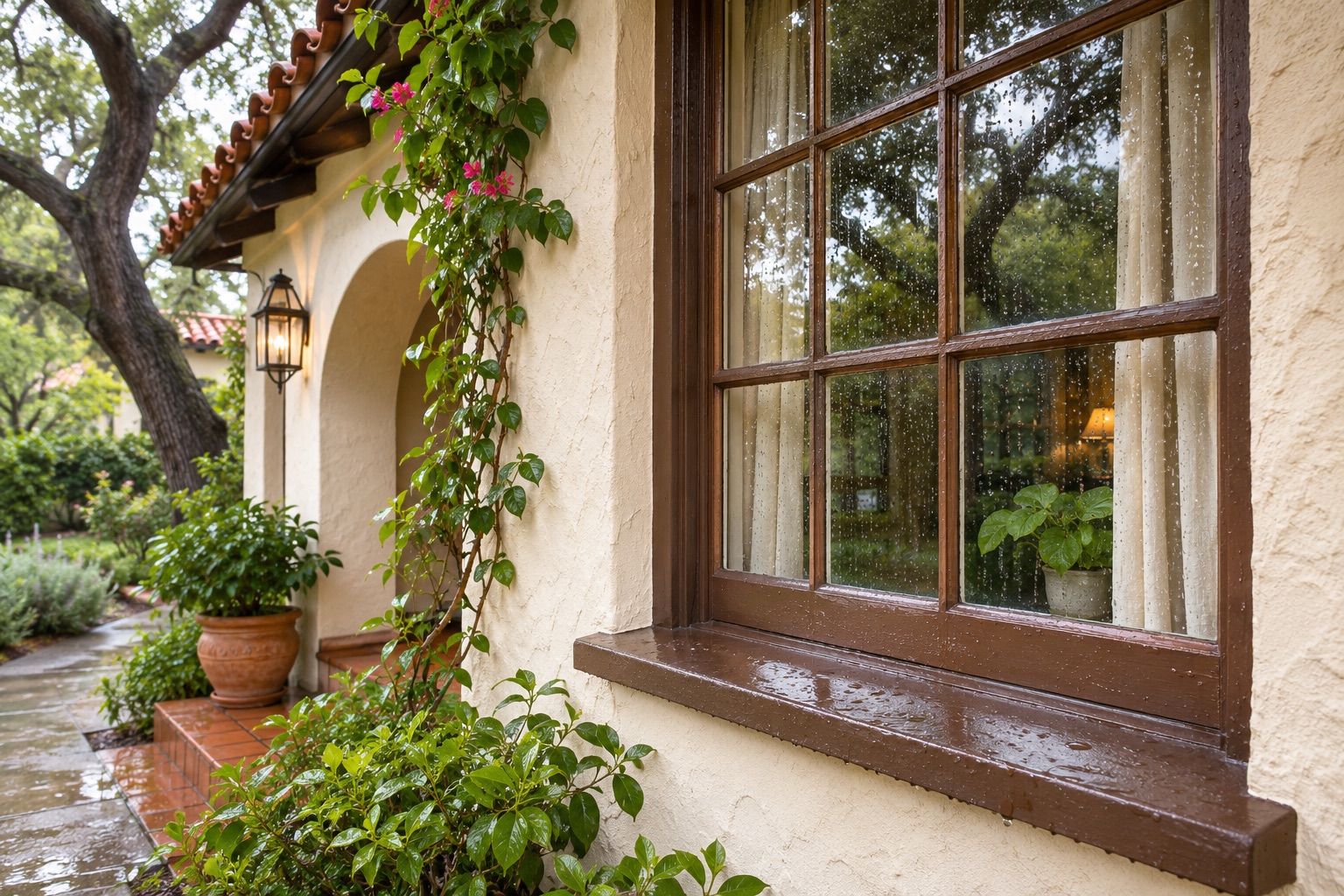
Water around a window can be unsettling, especially after a Pasadena rainstorm when the source is not obvious. Homeowners often want to know whether they need a new window, a repair, or a different trade. The most useful first step is to separate what you observed from what you suspect. A damp sill is a symptom; the path that brought water there still needs to be understood.
A wet sill does not prove the window failed
Water on an interior sill gets attention because it is visible and close to the window. But the point where it appears may be far from where it entered. Wind-driven rain can reach a window differently from straight rain. Water may also travel behind siding, stucco, trim, or wall layers before finding an opening indoors. A nearby roof edge, balcony, plumbing line, or condensation problem can create a similar stain. Treat the wet sill as evidence to document, not a verdict that a new window is automatically needed.
Notice whether the water appears only during strong wind, during any rain, or even on dry days. A storm-only pattern may point toward exterior water management. Moisture that appears in the morning, during humid weather, or after showers may have a different cause. Write down which window is affected, which side of the home it faces, the approximate time, rain intensity, and any wind direction you know. A short log over more than one weather event can make a contractor conversation more specific and may help rule out guesses.
For a broader overview, read our Pasadena window leak and moisture guide.
First steps while the area is wet
Move electronics, fabrics, and furniture away from the affected wall. Blot standing water and dry surfaces you can safely reach. If water is near an outlet, wiring, or a ceiling fixture, avoid touching wet electrical components and contact a qualified professional. Use a bucket or towel to limit spread, but do not pry off trim, cut drywall, or climb onto a roof to look for the source. Those actions can create a safety issue, disturb evidence, or expose concealed materials without fixing the water path.
Take clear photographs before wiping everything away: one showing the whole wall and window, one showing the sill and corners, and close views of stains, bubbling paint, swollen trim, or visible gaps. Add the date and weather notes. Photograph the exterior only from a stable, safe place at ground level. Do not spray a hose at the window as a diagnostic test; uncontrolled water can worsen hidden damage and does not reproduce the pressure or direction of real rain. A qualified evaluator should explain a planned test and its limits before water is applied.
Look for patterns instead of taking the trim apart
Without removing building materials, look for repeatable clues. Is water limited to one lower corner, spread across the full sill, running down from above, or showing at the side casing? Does it follow the same path each time? Is paint blistered, caulk cracked, or wood soft? Is there a roof valley, gutter, downspout, or wall joint above? These observations can help narrow the conversation, but they do not establish the concealed condition behind the finish.
Check whether the window is closed and latched as intended, and whether visible drainage slots are clear. Some window designs include openings that let incidental water drain back outside. Do not cover or fill those openings. The Department of Energy’s Building America Solution Center notes that window flashing and drainage details help manage water, and that nearby wall, roof, plumbing, or humidity sources can also be involved. Its guidance is useful background, but it cannot diagnose a specific Pasadena home from a photo.
For moisture-control background, see the EPA’s guide to mold and moisture. Its drying guidance is general and does not replace professional assessment of concealed damage.
Possible sources around a window opening
The window unit itself can have a damaged frame, glazing joint, sash connection, or operating component. The perimeter joint can also be involved. Behind the exterior finish, flashing is intended to direct water out and away from the rough opening. If layers overlap incorrectly, are missing, or have deteriorated, water can enter the wall even when the visible caulk line looks intact. The sill and surrounding wall are part of the same water-management assembly; replacing only the glass does not necessarily address every route.
Water can arrive from above and show up at the window head or jamb. A roof leak, gutter overflow, stucco crack, deck connection, plumbing leak, or moisture condensing on a cold surface may imitate window leakage. If moisture appears when it has not rained, or if the pattern spans several windows or walls, widen the investigation. The right trade depends on evidence: window specialist for a unit or replacement question, roofer for roof clues, plumber for supply or drain clues, and building-envelope or restoration professional for broader concealed moisture.
The DOE Building America Solution Center’s window flashing guidance describes water-management details and possible sources.
Why repeated caulking may not answer the question
Sealant has a role at certain joints, but it is not a universal water-management system. Adding a bead over the visible opening can hide a gap while leaving a flashing defect, failed material, blocked drainage path, or water source higher on the wall untouched. It can also trap water if applied across a designed drain opening. If a prior caulk attempt did not help, record what was sealed and when; that history is useful. The next step should be to explain the suspected entry point and the proposed repair, not simply apply more product everywhere.
Before any exterior work, ask the provider to identify the exact joint being sealed, the material condition, and whether drainage openings remain functional. Ask what evidence points to the window rather than the roof or wall. If the provider recommends replacement, request an explanation of the unit condition, removal approach, opening preparation, flashing or water-management scope, and finish work. The goal is an understandable scope and a path to address the source, not a guarantee that one material will stop every leak.
When a professional evaluation is appropriate
Call for help if water returns, the wall or sill remains damp, trim is soft, paint repeatedly blisters, the leak spreads, or there is an odor or visible growth. Persistent wet materials merit prompt attention. The EPA recommends drying wet materials as soon as possible, ideally within 24 to 48 hours, and not enclosing wet materials. This is general prevention guidance; extensive water damage or suspected mold may call for a qualified remediation professional. Do not rely on a window installer to provide mold assessment or restoration unless that scope is confirmed and appropriate.
When you contact a contractor, describe the observed condition and ask what services the company actually provides. American Reliable Windows & Doors’ public service information covers window sales, installation, and replacement. It does not confirm standalone leak testing, water-intrusion diagnosis, caulking, or restoration. We can discuss replacement-window options when the existing window is part of the issue; call to confirm whether your situation fits our scope or requires another specialist. This avoids booking a replacement estimate when the immediate need is a roof or plumbing diagnosis.
Pasadena considerations for older or historic homes
Pasadena has homes of many ages and styles, including properties with original wood windows. A stain or soft patch does not automatically mean every window must be removed. First separate the source of moisture from the condition of the window and surrounding trim. If the home is in a designated landmark or historic district, changing original street-visible windows may involve preservation review. Requirements depend on the property and project; not every Pasadena home is subject to the same process.
The City’s historic-preservation page says window replacement is among changes commonly reviewed in landmark districts and explains that any required approval comes before a building permit. Confirm the property status and current requirements with City staff before committing to visible exterior changes. If preservation matters, ask a qualified wood-window restoration professional whether localized repairs are possible, and compare that scope with a replacement estimate. A balanced decision weighs water control, remaining material condition, operation, appearance, and any applicable review.
A practical rain-event checklist
Before the next storm, if it is safe, note the window location and inspect visible exterior areas from the ground. During or after rain, record the time water first appears and whether wind is driving rain toward that side. Photograph the sill, surrounding wall, and nearby ceiling or trim. Note whether the water is a few drops, a steady track, or a pool. Move belongings, blot water, and ventilate or dry the area safely. Record any recent caulking, painting, roof, gutter, plumbing, or window work.
When requesting an appointment, send the timeline and photos and ask whether the provider handles source diagnosis, window repair, replacement, or only a defined subset. Ask if a visit is an estimate or a paid diagnostic service, what testing may occur, whether concealed finishes might be disturbed, and which repairs are excluded. If the source appears outside the window, ask who should evaluate it instead. These questions are especially useful when estimates differ because the contractors are proposing different scopes, not simply different prices.
Could the moisture be condensation instead?
Rain is not the only reason a window area can feel damp. Indoor water vapor can condense on a cold pane, frame, or nearby wall when warm, humid air meets a cooler surface. A useful clue is timing: condensation may appear on dry mornings or during certain indoor activities, while rain intrusion tends to follow weather exposure. The patterns can overlap, so this is not a diagnosis. Note whether moisture is on the room-facing glass, along the frame, at a wall joint, or pooling on the sill.
Think about whether the room has high humidity, a nearby kitchen or bathroom, limited ventilation, or a supply vent aimed at the window. Wipe a small area and observe whether water returns, but do not assume all recurring moisture is harmless condensation. Persistent dampness, soft materials, recurring stains, or odor deserve follow-up. The EPA identifies both leaks and condensation as moisture sources and recommends controlling the source and drying wet materials promptly.
When you speak with a contractor, explain if the window is wet after rain, during dry weather, or both. Share whether the glass or the surrounding trim is affected and whether the surface dries quickly. That distinction can help decide whether a window, roof, plumbing, ventilation, or building-envelope professional should be involved. If you cannot tell, ask the provider what signs would separate the possibilities and what the visit can establish.
American Reliable Windows & Doors’ published services are window sales, installation, and replacement. Standalone leak testing, water-intrusion diagnosis, caulking, restoration, and repair-only availability are not confirmed in the public service information. Call to confirm whether the requested work fits our scope.
Frequently asked questions
Should I replace a window if water appears on the sill?
Not based on that symptom alone. The source could be the window, its installation interface, the wall, roof, plumbing, or condensation. Document the pattern and ask for the evidence behind any repair or replacement recommendation.
Can I use a hose to find the leak?
Avoid uncontrolled hose testing. It can push water into hidden areas and may not match actual rain conditions. Ask a qualified professional what a controlled test would involve and what the result can establish.
Should I caulk the window immediately?
Do not seal drainage openings or cover wet materials. If the source is unclear or caulking has already failed, document the condition and identify the water path before applying more sealant.
When should I call someone?
Seek professional help for recurring water, soft trim, spreading stains, persistent dampness, electrical exposure, or suspected concealed damage. Match the trade to likely source and requested scope.
Does American Reliable provide leak testing in Pasadena?
The company’s published offering lists window sales, installation, and replacement. Call to confirm whether your specific repair-only or diagnostic request is available.
Where can Pasadena homeowners learn about historic review?
Check directly with the City of Pasadena if the property is designated or in a historic district before changing original exterior windows.
Talk through replacement options
If the window itself appears to be part of the problem, share your photos and timeline and ask what a replacement estimate includes. We serve Los Angeles County and can discuss window sales and installation for the scope we confirm.
Request a window estimate · Call (818) 787-1101 · Pasadena service-area information

Elliot Berookhim
Window & Door Installation Specialist
American Reliable Windows & Doors
With over 15 years of industry experience, Elliot Berookhim specializes in residential window and patio door replacement throughout Los Angeles, California. At American Reliable Windows & Doors, he emphasizes quality materials, trained in-house installers, transparent pricing, and installation practices designed for long-term performance. His firsthand experience helps homeowners avoid common problems such as poor installation, premature window failure, and costly water leaks.
✓ CA C-17 License #1025297 ✦ 15+ Years Experience
Published November 17, 2026 · Updated November 17, 2026
