Quick answer
One room can feel colder near a window because outside air is leaking through a sash or frame gap, but moving air is not the only explanation. A cool glass surface can chill nearby air, which then sinks and creates a draft-like feeling. Uneven heating or cooling, a blocked vent, insulation differences, shade, and room layout can also contribute. Compare the window joints with nearby rooms and check whether the sensation is actual moving air before choosing weatherstripping or replacement.
Why the problem can be limited to one room
Homeowners often describe the problem as “the bedroom is freezing” or “the couch by the window is uncomfortable,” even when the thermostat shows the expected temperature. That experience is real, but it does not point to one cause by itself. Rooms differ in window orientation, shade, exterior-wall area, insulation, duct supply, door position, and how people use the space. A window may be part of the picture without being the only part.
The first distinction is between air infiltration and a cold surface or airflow pattern. Air infiltration means outside air passes through a gap in the window, frame, wall, or another part of the building. A cold glass surface can cool the thin layer of room air beside it; that air may sink toward the floor and be replaced by warmer air above. The resulting circulation can feel like a draft even though the window is not leaking outside air.
The U.S. Department of Energy explains that cold window surfaces can create convection patterns that feel drafty, while poor installation or ineffective weatherstripping can also cause real air leakage. ENERGY STAR’s comfort guidance also identifies hot or cold spots and window moisture as signs worth investigating. The useful takeaway is not “replace the window,” but “identify which mechanism is present.”
Five common reasons one room feels cold
1. Air leaks at the sash or frame
If you can feel moving air at the meeting rail, along the side of an operable sash, or near the lock, the window may not be closing tightly. Worn weatherstripping, an unengaged lock, sash misalignment, or hardware problems can leave a gap. Air near the trim-to-wall edge may involve the frame perimeter or installation opening instead. These conditions call for different checks.
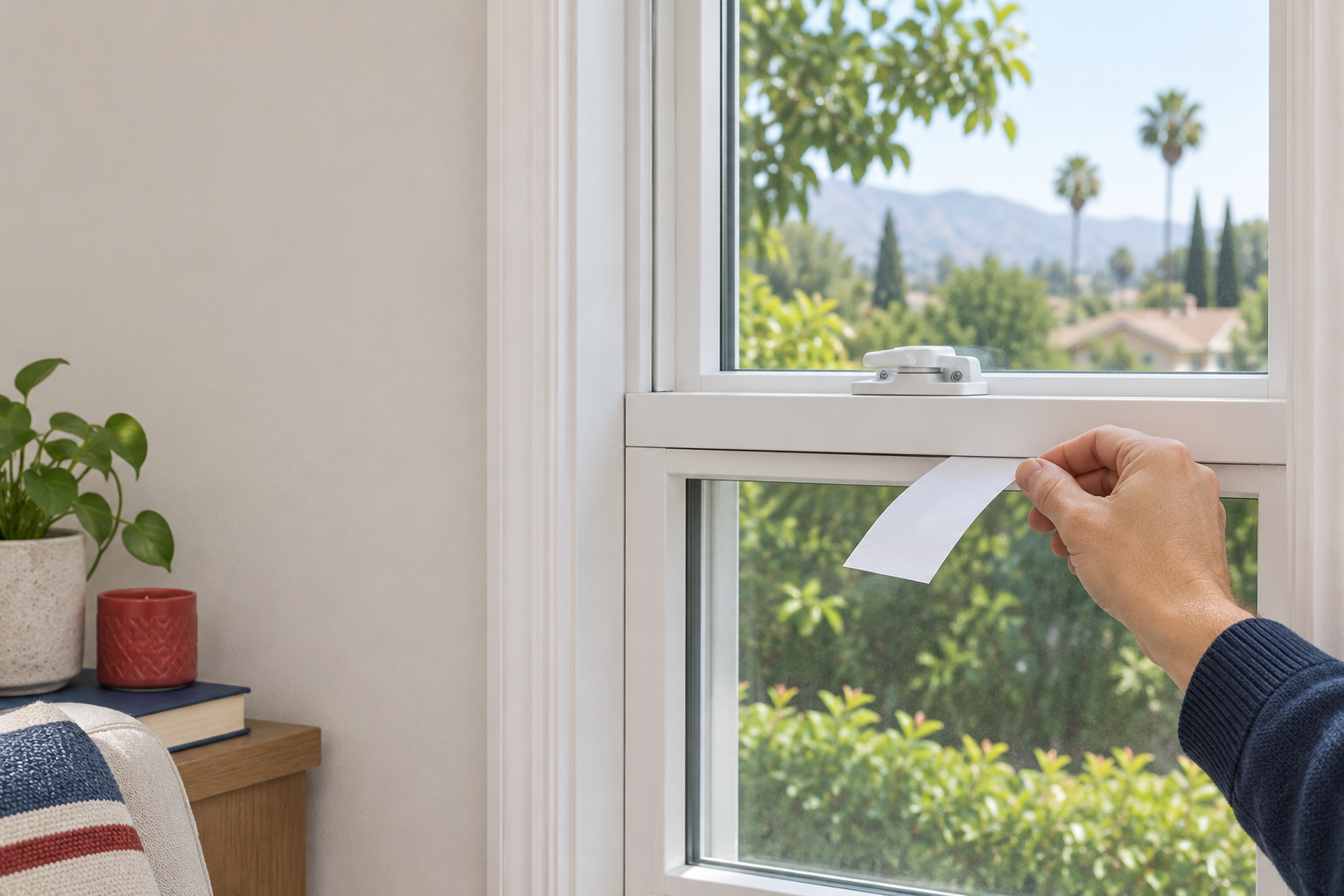
Look for a consistent sensation at one seam while the window is closed and locked. A narrow paper strip can help compare contact between two parts of the sash joint. It cannot measure the amount of leakage or show what is happening behind the trim. If the handle is difficult to move, do not force it; note the window type and the point where it resists.
2. Cool glass creates a descending air pattern
Even when sealed, glass can be cooler than the room. Air that touches the interior pane cools and becomes denser, then moves downward. Someone sitting near the sill may feel this movement as a cold draft. The effect can be stronger beside a large pane, a single-pane unit, a metal frame, or a room with little air circulation.
Try comparing the center of the glass with the sash and frame joints. If the sensation runs downward along the face of the glass but you do not detect air at a seam, the glass surface may be contributing. This simple observation does not establish the window’s thermal performance; a product label, specification, or professional evaluation is needed to compare products accurately.
3. Heating or cooling is distributed unevenly
A supply register may be partly blocked by furniture or a rug. A closed interior door can change how air returns to the HVAC system. A duct may have a leak or imbalance, and a thermostat in another room may not reflect conditions at the window. Check that vents are open and unobstructed and note when the system turns on and off.
Do not adjust HVAC equipment beyond ordinary homeowner controls if you are unsure how the system is balanced. Instead, record which rooms feel different, whether the issue appears during heating or cooling, and what happens when doors are open. A heating and cooling professional may be the right person to evaluate airflow if the window itself appears tight.
4. The room has different sun and shade exposure
Two adjacent rooms can receive very different solar exposure. A shaded room, a north-facing wall, overhanging trees, neighboring buildings, or heavy curtains can reduce direct sunlight and change how warm the space feels. In the San Fernando Valley, sunny afternoons and cooler evenings can make the timing of a comfort issue noticeable, but a local climate does not diagnose the source of one cold room.
Write down whether the room feels colder at night, before sunrise, or through the afternoon. Compare rooms with similar windows but different sun exposure. If the issue follows the shade pattern rather than a particular sash or seam, window replacement may not be the first step.
5. Insulation or air leakage exists elsewhere in the room
The exterior wall, attic above the room, floor over a garage or crawlspace, and electrical or plumbing penetrations can affect comfort. Air entering through an attic or wall cavity may be drawn toward a lower opening or circulate across the room. ENERGY STAR notes that many important air leaks are hidden outside the window area, including in attics and basements.
Look for clues beyond the window: a cold band along the baseboard, a draft at an outlet on an exterior wall, a ceiling hatch nearby, or a room that remains uncomfortable even when the window is covered. Do not remove electrical plates or drill into a wall to investigate. If the pattern suggests hidden leakage or missing insulation, ask a qualified home-energy professional to assess the broader building envelope.
Compare the symptoms before choosing a fix
| Observation | More consistent with | What to check next |
|---|---|---|
| Air felt at one sash seam | Sash contact, lock, or weatherstrip | Close and lock the window; compare paper-strip resistance at several points |
| Air at the trim-to-wall edge | Frame perimeter or rough opening | Look for visible separation or water stains; avoid removing trim as a first step |
| Cool movement down the glass, no seam leak detected | Cold-glass convection | Compare glass and joints; note window size, frame, shade, and time of day |
| Whole room remains cold while window joints feel still | HVAC, insulation, exterior wall, or floor | Check open vents, door position, time of day, and other cold spots |
| Persistent haze between panes | Possible insulated-glass seal failure | Photograph it and locate the product label; review warranty information |
These clues can overlap. A window might leak at one corner and also create a cold surface pattern. If the room contains visible water, peeling paint, or persistent dampness, record that separately; moisture can have a different source and may need prompt evaluation.
A simple homeowner comparison routine
- Choose a repeatable time. Check the room when the comfort issue is noticeable and record the outdoor conditions and HVAC status.
- Check the whole window. Feel around the sash joint, lock, frame, and trim-to-wall edge. Keep the window closed and locked during the comparison.
- Compare the glass. Notice whether the sensation is at a seam or across the pane. Do not use an open flame or a hot object as a test.
- Check nearby conditions. Make sure registers are not blocked and note whether an open door changes the room’s comfort.
- Compare another room. A nearby room with a similar window can help reveal whether orientation, shade, or airflow differs.
- Take photos and notes. Record fog, visible damage, stains, and the specific location of air movement.
This routine will not replace a blower-door test, infrared evaluation, or inspection where those are appropriate. It helps you describe the pattern and avoid treating every cold room as a failed window.
What window replacement can and cannot change
If the window itself has substantial air leakage, a failing frame, poor operation, or persistent between-pane fog, replacement may be worth discussing. Product performance values can help compare options. The Department of Energy explains that U-factor relates to heat flow and that solar heat gain coefficient describes solar heat transmitted through a product. The right balance depends on the home’s goals, orientation, and climate; do not assume one rating or brand is best for every opening.
If the main issue is duct imbalance, wall insulation, shade, or cold air pooling from the glass, replacing a window may have limited effect. Ask an evaluator to identify what the proposal addresses and what it does not. Avoid promises of a precise energy-bill reduction without a documented analysis of the home and product.
American Reliable Windows & Doors lists window sales, replacement, and installation in Van Nuys. The current public service information does not specify standalone HVAC balancing or insulation services. If the findings point to a window, visit the drafty-window and failed-seal guide or review replacement-window options. If the source appears elsewhere in the home, consult the professional whose work matches that system.
Keep the comparison useful
Avoid making several changes at once while trying to locate the source. If you close a vent, add a temporary seal, change the thermostat, and move furniture on the same day, it becomes harder to know which condition changed the room. Observe the window, airflow, and room separately. Do not seal a window shut or cover a vent as a permanent fix; normal operation, drainage, and safe ventilation still matter.
Use a short observation log
For a few days, note when the room feels cold and what is happening at that time. Record whether the feeling starts before or after the HVAC system turns on, whether the sun reaches that side of the home, and whether the sensation is strongest at the glass, sash, trim, floor, or supply register. Briefly compare the room with a similar one, and note if opening a curtain changes the sensation. Do not use a single check as a diagnosis; the point is to look for a repeatable pattern.
If the symptom is consistently tied to one window joint, mention that location when requesting an evaluation. If the whole room changes with the HVAC cycle or remains cold away from the window, include that too. A window specialist can assess the window assembly, while an HVAC or home-energy professional may be better suited to concerns outside it.
Frequently asked questions
Why is my bedroom colder than the rest of my Van Nuys home?
The room may have a window leak, cool glass, different shade, blocked supply register, insulation gap, or a door and return-air condition. Compare the window joints with the rest of the room and note when the issue occurs before choosing a contractor or product.
Does feeling cold air near glass mean the window is leaking?
No. Air cooled by the glass can sink and feel drafty. Check the sash and frame joints for moving air and compare the sensation across the glass before concluding that outside air is entering.
Can curtains make a room feel colder near the window?
Heavy or tightly closed coverings can reduce airflow over the glass and trap a cooler pocket near the window. Open them briefly to compare the room, but do not treat that as proof of a leak or seal failure.
Should I replace one window if only one room is cold?
Not until the source is clearer. A single affected room can point to a local window problem, but it can also result from HVAC distribution, shading, insulation, or room layout. Ask for the cause to be identified and compare the scope of any proposed repair or replacement.
What should I share when requesting a window evaluation?
Share the room, window location, time the issue appears, HVAC status, whether you feel air at a seam or only near the glass, and photos of fog or damage. This information helps the provider understand the question, but an inspection may still be necessary.
A useful next step
Describe the symptom before naming the repair. If the air is at a sash or frame, note the exact point; if the entire room is cold, include HVAC, shade, and other wall or floor observations. American Reliable Windows & Doors is located in Van Nuys and lists window replacement, installation, and sales. You can request a window estimate or call (818) 787-1101 to ask whether the specific service is available. Read the core Van Nuys drafty-windows page for a symptom-by-symptom comparison.
Sources
- U.S. Department of Energy: Measure Guideline — Energy-Efficient Window Performance and Selection
- ENERGY STAR: Residential Windows, Doors, and Skylights
- ENERGY STAR: Locating Air Leaks
- U.S. Department of Energy: Energy-Efficient Residential Window Performance

Elliot Berookhim
With over 15 years of industry experience, Elliot Berookhim specializes in residential window and patio door replacement throughout Los Angeles, California. At American Reliable Windows & Doors, he emphasizes quality materials, trained in-house installers, transparent pricing, and installation practices designed for long-term performance. His firsthand experience helps homeowners avoid common problems such as poor installation, premature window failure, and costly water leaks.